crbcut (say "curbcut") · Closed beta
Know which sites pencil before you call the EPC.
CRBCUT does the work an EPC does before a shovel goes in. It finds real sites, drafts the layout and the drawing set, prices the build with incentives and prepares the utility paperwork, for EV charging and battery storage. Your engineer reviews and seals it. You stop paying to find out a site was dead.
Built for charge point operators, developers and the engineers who work with them.- 1Dual-port DC fast charger on pad
- 2New switchboard with metering
- 3Utility pad-mount transformer
- 4Battery, sized to the grid gap
- 5Underground conduit in trench
| Key | Qty | Description |
|---|---|---|
| A | 50 | States covered. New areas build on first search. |
| B | 9 | Scored data layers per lot, each with its source. |
| C | Seconds | To rank every lot in a searched area. |
| D | 1 to 3 min | For an AI layout drawn on the aerial photo. |
| E | 3,502 | Priced items in the pricebook, each with a seller, link and date. |
| F | 6 | Logged review gates between the draft and your engineer's seal. |
How it works
Six jobs, one project record.
Each job works on its own. Together they share one design record, so a change made once updates the drawings, the materials list, the estimate, the utility forms and the engineer's review.
Find the site.
A ranked list of real parking lots, with the reasons.
Enter a zip, address or map pin, a radius and a use case. CRBCUT scores every lot nearby on nine layers: traffic, corridor access, the charging gap, a grid screen, real-estate fit, nearby amenities, lot size, demand and incentives. Every score shows its source and its confidence. Data that is missing shows as missing, never as zero.
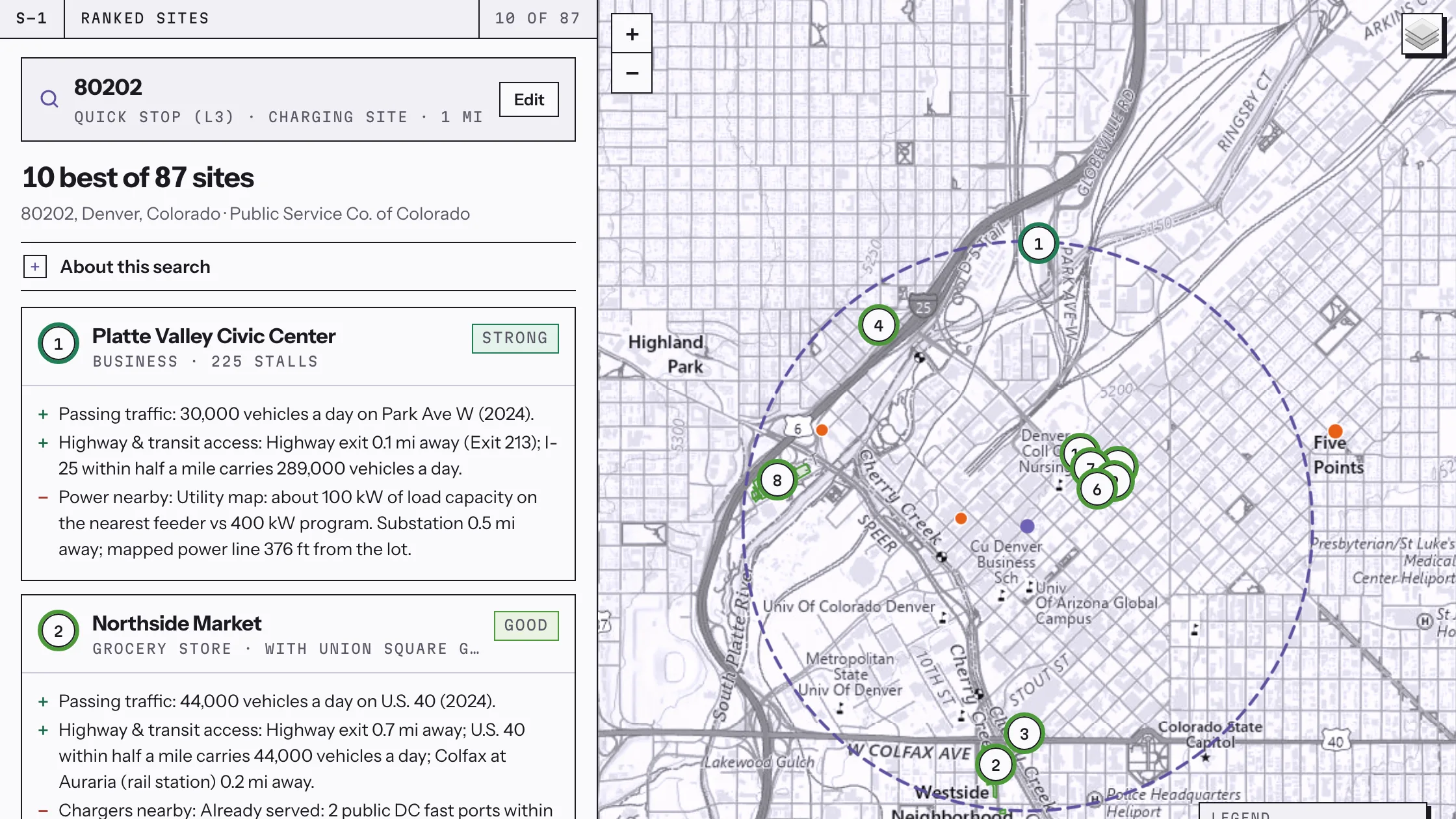
- Rated, with reasons
- Power checked up front
- Every lot scored
Design it.
A layout drawn on the aerial photo, checked against code.
AI reads the aerial, converts existing striped stalls, places chargers, switchgear and the transformer or tie-in, then checks and corrects its own work in one to three minutes. An NEC-based engine sizes every breaker, conductor, conduit and voltage drop and cites the code section for each number. It checks whether the existing service can carry the load, and proposes load management or a battery when it cannot. The equipment library is maker-neutral.
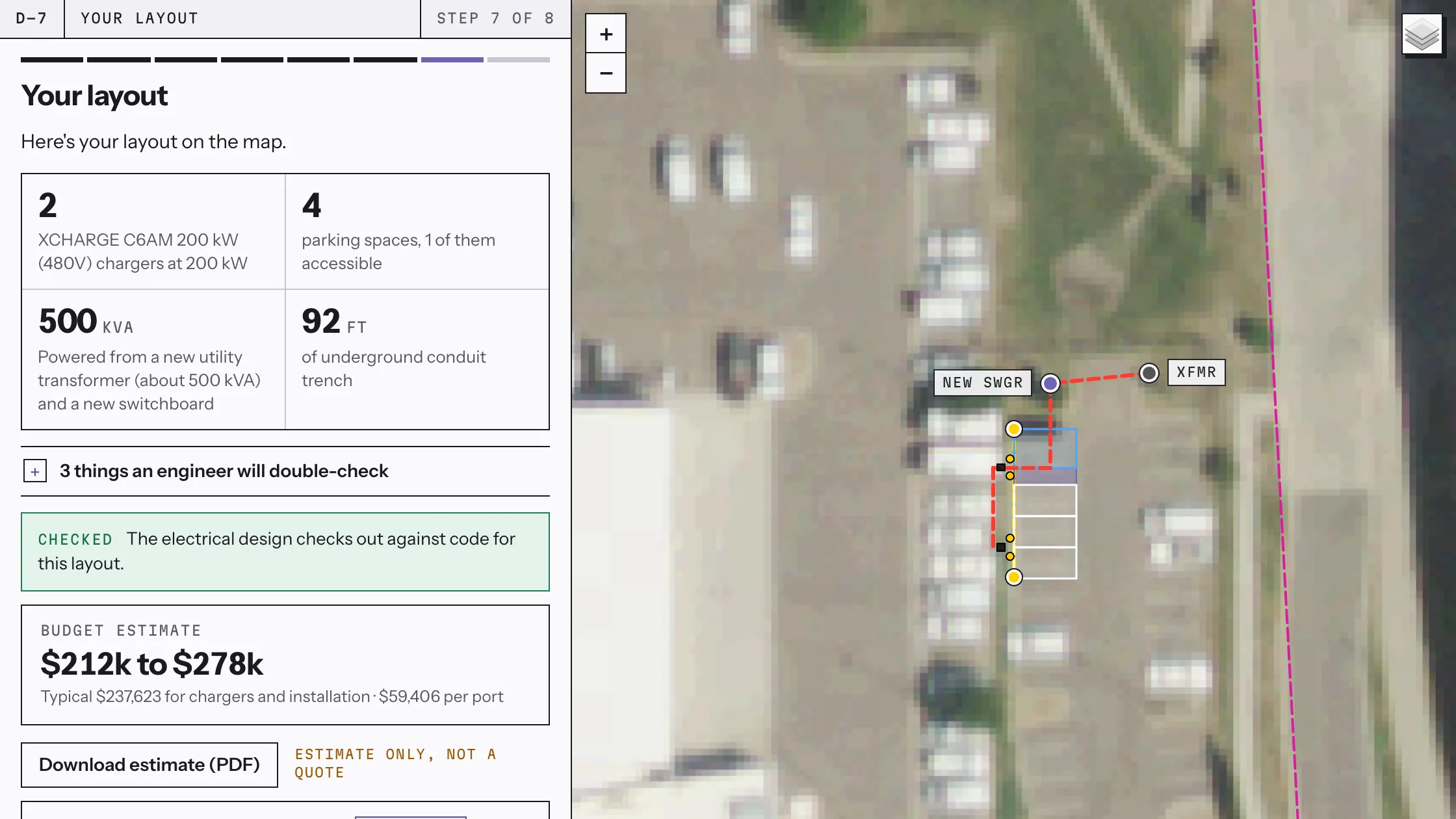
- Trench length measured
- Checked against code
- Drawn on the aerial
- Budget estimate included
Draw the set.
A pricing set or a full set, ready for review.
A pricing set (CD50) has the site plans on the aerial, a one-line diagram, load calculations and schedules. A full set (CD100) adds the code summary, foundations and pads, signage and the accessible stall, trench and grounding, and a circuited electrical plan, marked for engineer review. Exports are PDF, DXF and DWG, with a bill of materials and a calculation report.
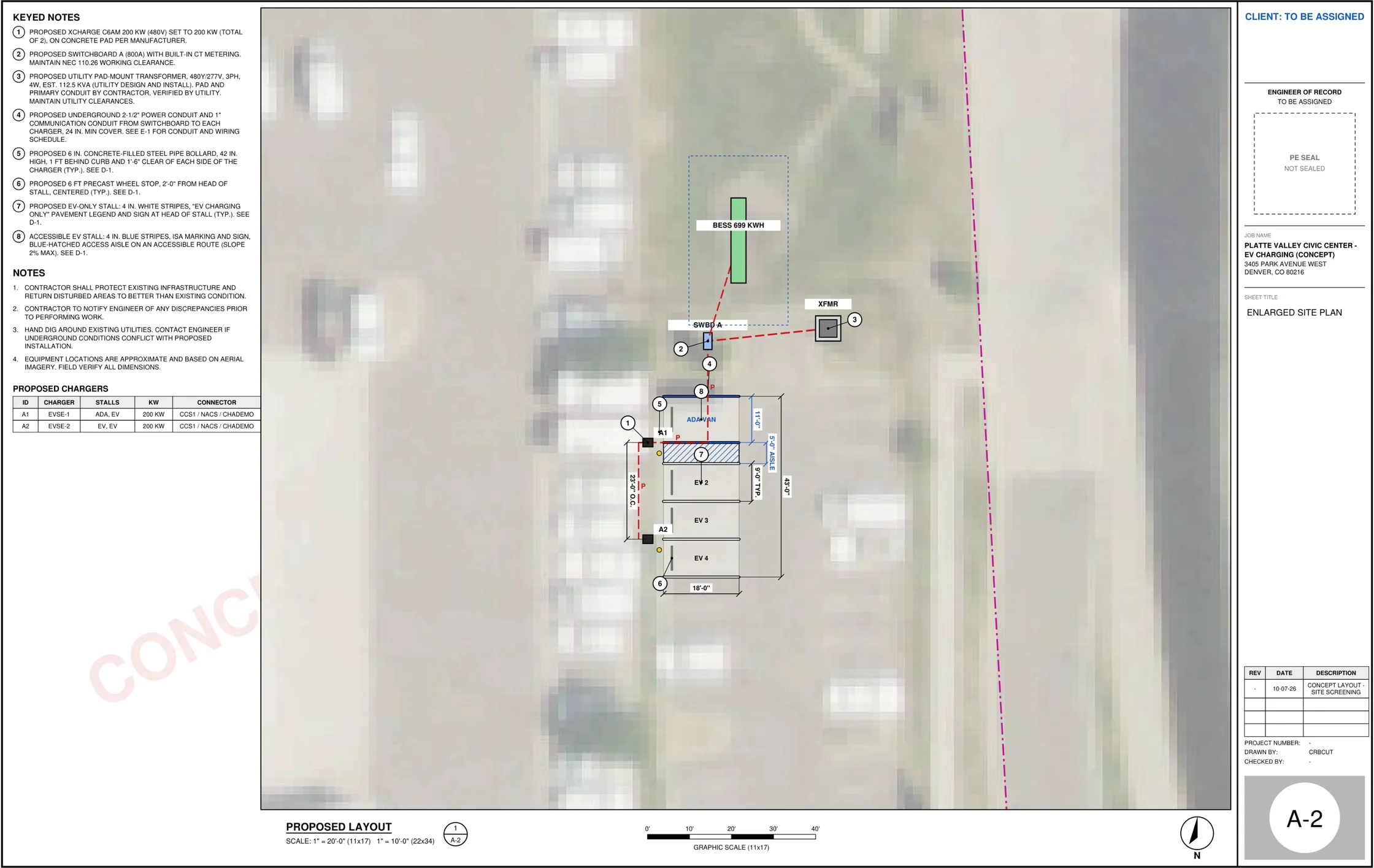
- Keyed notes and schedule
- Battery on the plan
- Room for your engineer's seal
Price it.
A budget estimate built from the design's own materials list.
Every line of the materials list is priced from a sourced pricebook of 3,502 items, each with a seller, link and date. The estimate rolls up by scope and shows a low, typical and high range. Potential incentives sit beside the full cost, never inside it, and stack only where a program's terms allow. It comes as a branded PDF that says up front it is a budget estimate, not a quote.
| Key | Scope | Priced from | Shown as |
|---|---|---|---|
| 1 | Gear | Chargers by model and power band, switchgear and transformers | Low, typical, high |
| 2 | Electrical | Wire, conduit and breakers from the design's own materials list | Low, typical, high |
| 3 | Civil and boring | State DOT installed unit costs and public EV construction bids | Low, typical, high |
| 4 | Soft costs | Design, permitting and utility coordination | Editable defaults |
| 5 | Contingency | Construction lines only | A set percentage |
| 6 | Incentives | Approved programs, utility first, then state | Beside the total, if approved |
Each line shows its seller, link and date. An unknown item shows "not priced", never $0.
Prepare the utility paperwork.
Load letters and application packets on the utility's own forms.
CRBCUT fills the utility's own load letter templates and application packets from the design, then reads every file back and checks it against the drawings. A tracker follows each case from application to energized meter, with its deadlines and requests for information. When the utility sends a design or cost letter, AI reads it, quotes the evidence and flags anything that differs from the design for your engineer. You or your agent sign and file.
- CRBCUTPrepareLoad letter and packet filled from the design.
- CRBCUTCheckEvery file read back against the drawings.
- YouFileYou or your agent sign and submit.
- CRBCUTDesign letterRead by AI, differences flagged.
- CRBCUTCost letterFindings sent to your engineer.
- UtilityEnergizedMeter set, case closed.
Tracked case by case: stage, deadlines, requests for information and an audit log.
Hand it to your engineer.
Reviewed and sealed, with the evidence attached.
A licensed engineer of record reviews the project through six gates: accept, design basis, flags, spot checks, redlines and seal. Only an engineer with a verified license in the project's state can accept it, and every decision is logged in an audit trail. Bring your own engineer of record, or invite one into the workspace.
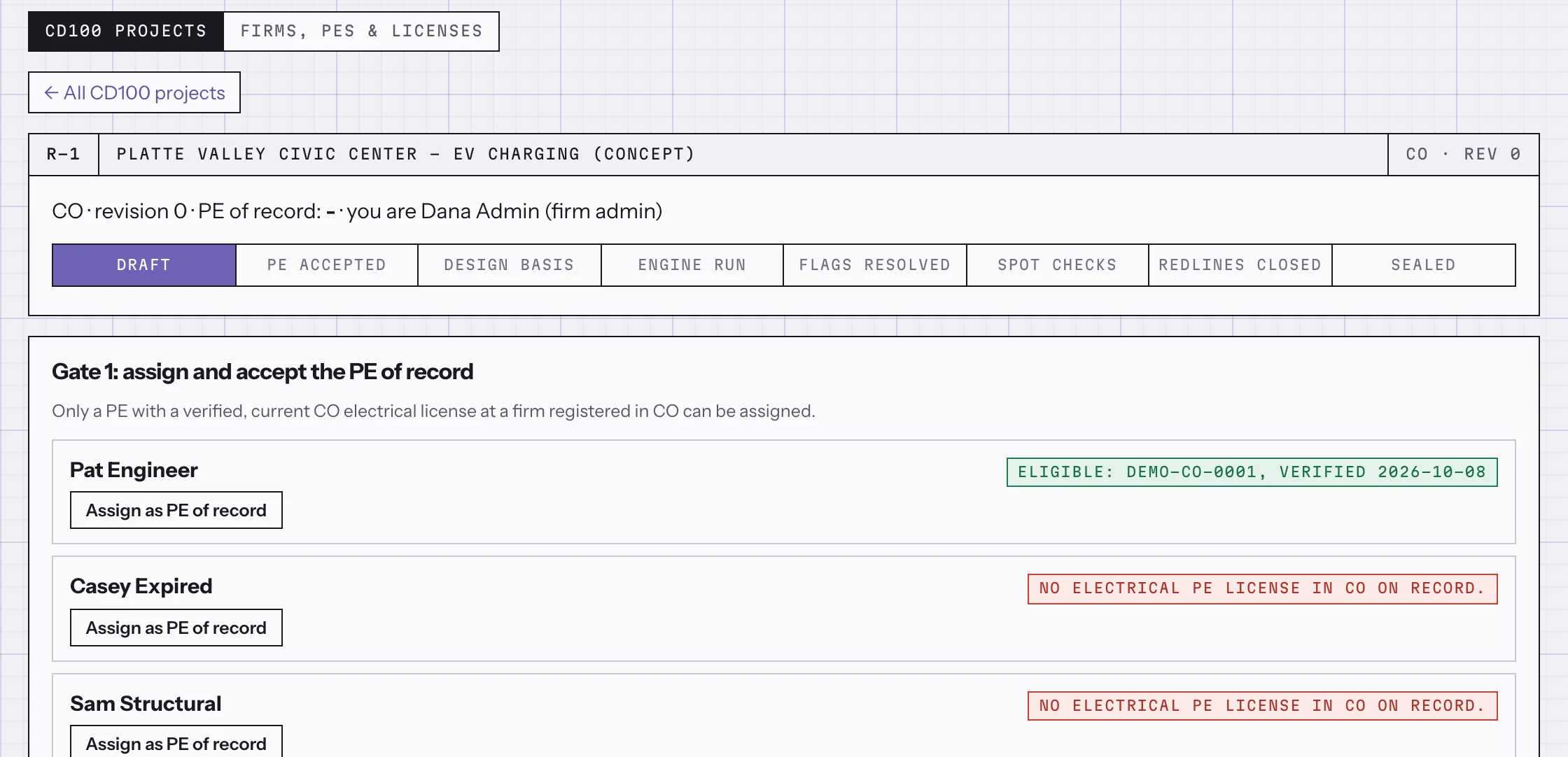
- Six logged gates to seal
- License verified
Two modes, one project. Guided asks plain-language questions. Pro shows every score, input, source and weight.
Battery storage
When the grid falls short, add a battery.
A site can have the traffic and the parking and still not have the power. CRBCUT designs the battery in the same project, with the same code checks.
With chargers
Full-speed charging on a small service.
CRBCUT compares what the chargers can draw with what the utility's capacity map shows is available. When there is a gap, it sizes a battery to cover it, compares units from several makers on cost, savings and payback, and places the battery on the plan with its circuit and fire-code spacing.
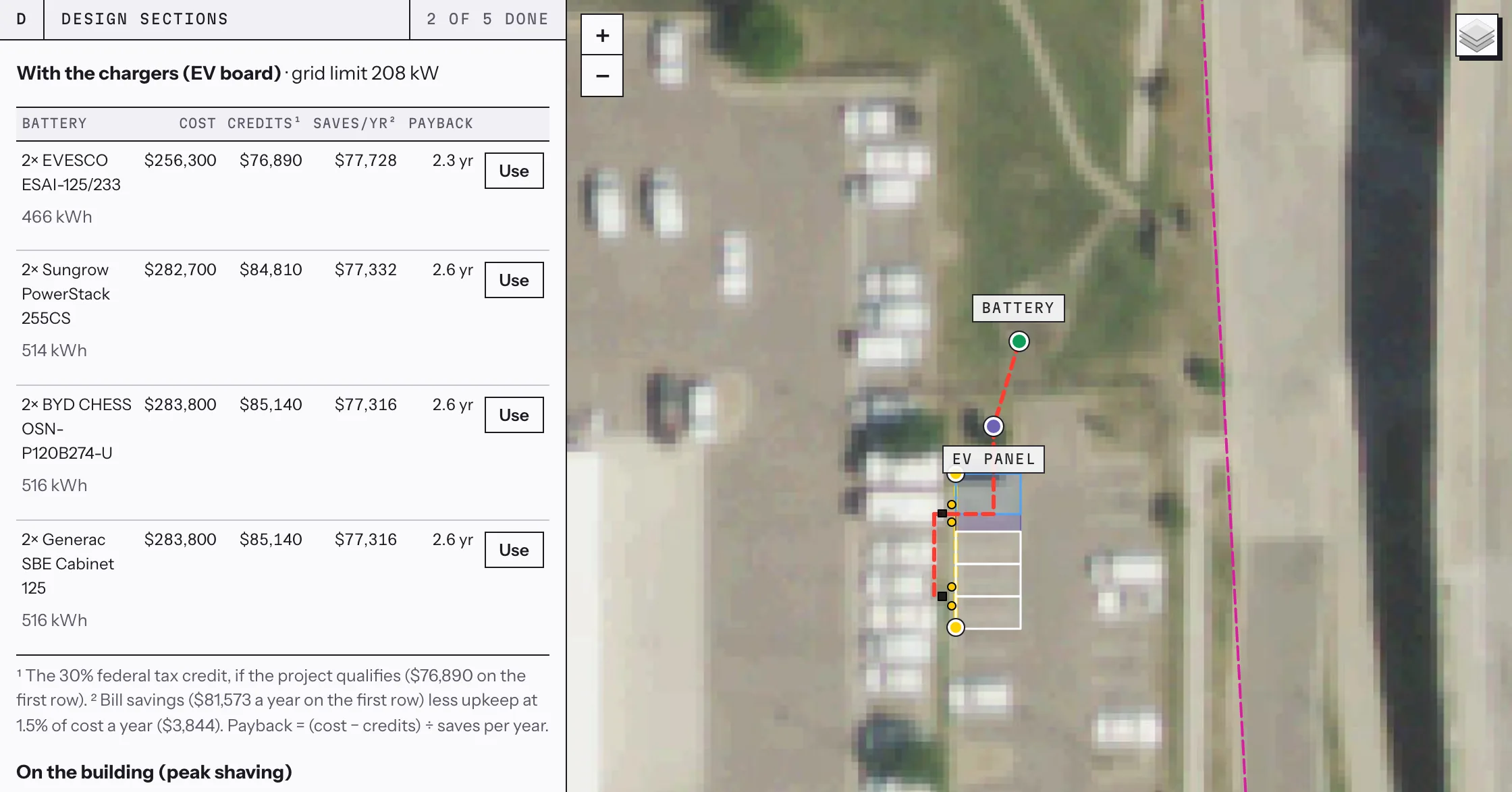
- Grid draw capped at 208 kW
- Four makers compared
- Payback math on screen
- Placed on the plan
On its own
A battery behind the meter, no chargers.
Put a battery on a building's existing electrical service to cut its monthly peak. CRBCUT reads the building's electric bills, sizes the battery, checks the connection to the existing switchgear against code and estimates the yearly saving and the payback. An engineer confirms it on site.
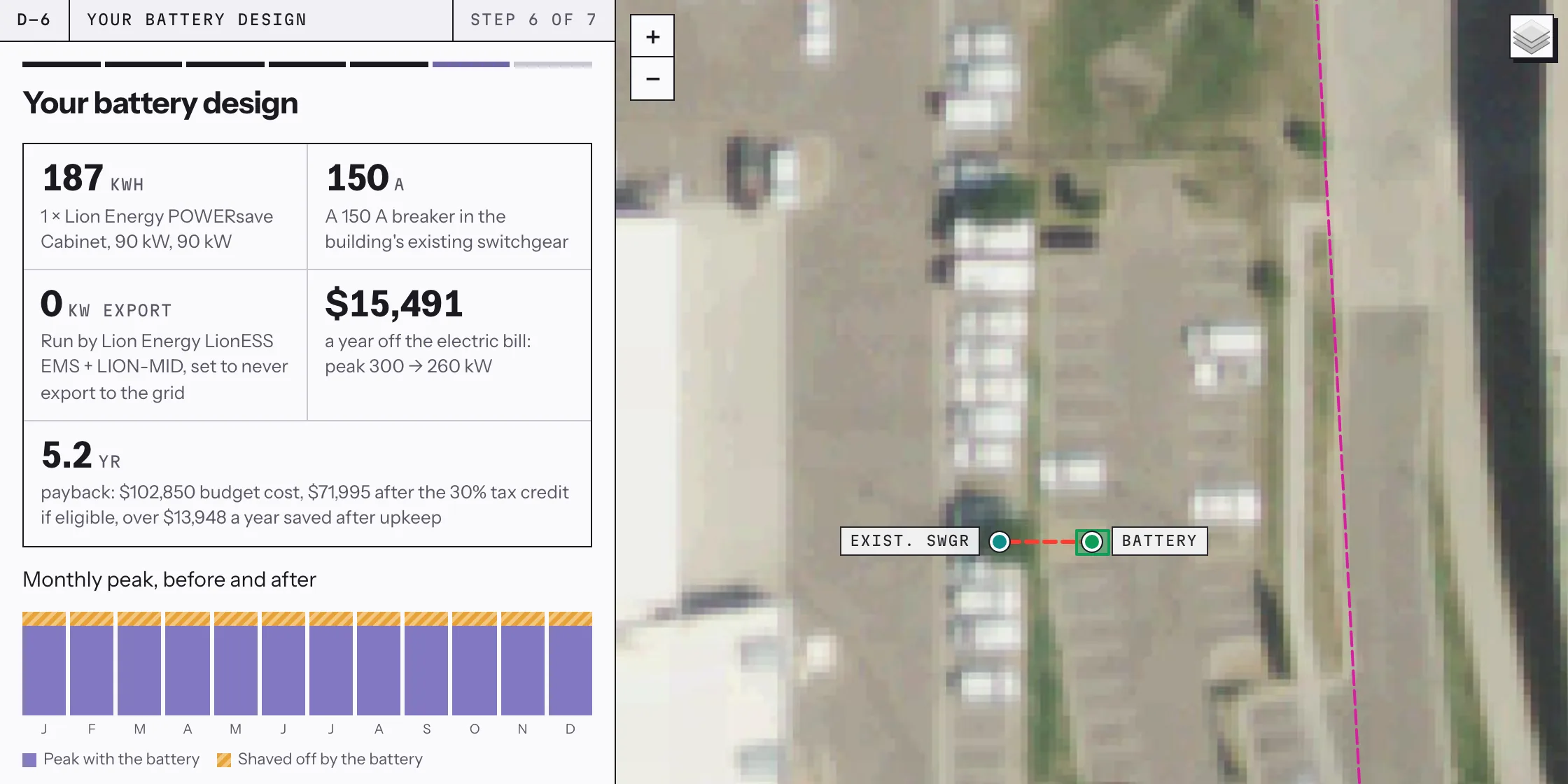
- Sized from your bills
- Yearly saving estimated
- Peak shaved every month
- Tied to existing switchgear
Always building
It gets sharper with every search.
CRBCUT is not a fixed database. Every search, review and correction adds to what the next project starts with.
-
Coverage
Each search builds the map.
The first search in a new area pulls together its lots, traffic, grid and utility data and keeps it. The next search there takes seconds, for you and for everyone after you.
-
Local knowledge
Verified once, used everywhere.
When a person verifies a utility's service rules or an incentive program, that knowledge stays in the product and shapes every later design in that territory.
-
Feedback
Shaped by the people using it.
Beta users and engineers flag anything that looks off from inside the product. Those reports decide what gets fixed and what gets built next.
How we work with your team
Software does the first pass. Your people make the call.
CRBCUT gets you to a solid starting point fast and keeps your engineer, your utility and your builders in the loop from there. Here is who does what.
- Your engineer seals it.
- CRBCUT drafts the set and assembles the checks. A licensed engineer of record reviews it in a gated, logged workflow and applies the seal.
- Ready for review from day one.
- Every output is marked preliminary until your engineer signs it, so everyone on the project knows what stage it is at.
- Your utility confirms the power.
- The grid check gives you an early read from mapped substations, lines and utility capacity maps, so you know which sites to raise with the utility first.
- Incentives, checked by a person.
- We show the programs we find for each site. Once a person has verified one, it counts toward the score.
- Clear about what we know.
- Where data is missing, we say so and leave it out of the score, so you can see what is solid and what still needs a look.
- Every number shows its work.
- Scores cite their sources and confidence. Electrical numbers cite their NEC section, which makes review faster for your engineer.
- Estimates, not quotes.
- Every estimate says it is a budget estimate, not a quote. Items we cannot price show as not priced, never as zero, so your estimator knows what to fill in.
- You file with the utility.
- CRBCUT prepares the application on the utility's own forms and checks it against the drawings. You or your agent sign and file it, so the relationship stays yours.
- You choose the equipment.
- The equipment library is maker-neutral. Compare chargers and batteries from any maker and design with the ones you prefer.
The goal is a set your engineer is glad to receive.
Who it is for
Everyone who plays a part in getting a site built.
-
Charge point operators and developers
Build the pipeline from facts, not forecasts.
Which sites are worth chasing, and what will each one take?
Rank real lots on real data across your target markets, then see a layout, the electrical load and a budget estimate before you spend on a site walk. Track utility cases across the portfolio. Consistent scoring in every state you search.
For developers and CPOs -
EPCs, contractors and engineers
A draft your engineer can check, not redo.
Can I start from something other than a blank sheet?
A code-checked layout, calculations, a priced materials list and the utility packet to start from, with the decisions logged. You keep the stamp.
Request beta access -
Property owners and managers
Can my lot host chargers?
Should I host chargers on my lot, and what would it take?
Type your address and get a plain answer, a picture of chargers on your lot, a budget and potential incentives, plus up to three stronger sites nearby. Free to check.
For property owners
Where it goes
The front end today. Build and commissioning next.
The plan is one project record, from the first site search to the day the site is switched on.
What CRBCUT does
- Site, design, estimate, utility · in beta
- Permitting · rolling out
- Build · planned
- Commissioning · planned
What it covers
- EV charging · in beta
- Battery storage · in beta
- Solar · planned
- Building electrification · planned
- Microgrids · planned
Today CRBCUT covers the front end: site selection, design, the drawing set, the budget and the utility paperwork. Permitting is rolling out, starting with code summaries, accessibility details and fee estimates on every set. Build and commissioning come next, delivered with licensed engineers and local contractors, so the people who know the site stay on the job.
Who built it
Built by someone who has built these sites.
CRBCUT comes from Aatish Patel, founder of XCharge North America and its COO through the company's 2024 Nasdaq IPO. Six years of putting chargers in parking lots means the product is built around the questions that actually sink projects: the service upgrade nobody priced, the lot the landlord will not give up, the utility queue.
Aatish also runs The Charge Sheet, a public EV charger resource and planner.
Early access
Closed beta. Tell us what you build.
CRBCUT is in closed beta and covers all 50 states. Request access and say what you are siting, and we will send an invite as places open up.
Pricing: coming soon.
Plans are being set with beta users. Request access and we will tell you before anything changes.